

What is the Lawn to Legume Grant?
The Lawn to Legume (L2L) Grant program is a resource that offers a combination of services, including funding, to grantees interested in expanding native habitat for pollinators. When I applied, I was only aware of the funding side of the program. However, L2L has many educational resources, including coaching, which I found inspirational as well as helpful.
Who Should Apply for the L2L Grant?
Thinking of applying for the Lawns to Legumes grant? The application process isn’t nearly as lengthy as I assumed it would be. I mean, applying for a grant sounds like an arduous process, right? Applying for this particular one actually has quite a low barrier to entry, so before you decide, ask yourself a few questions.
- Am I willing to get my hands dirty? If not, am I willing to hire someone to get their hands dirty?
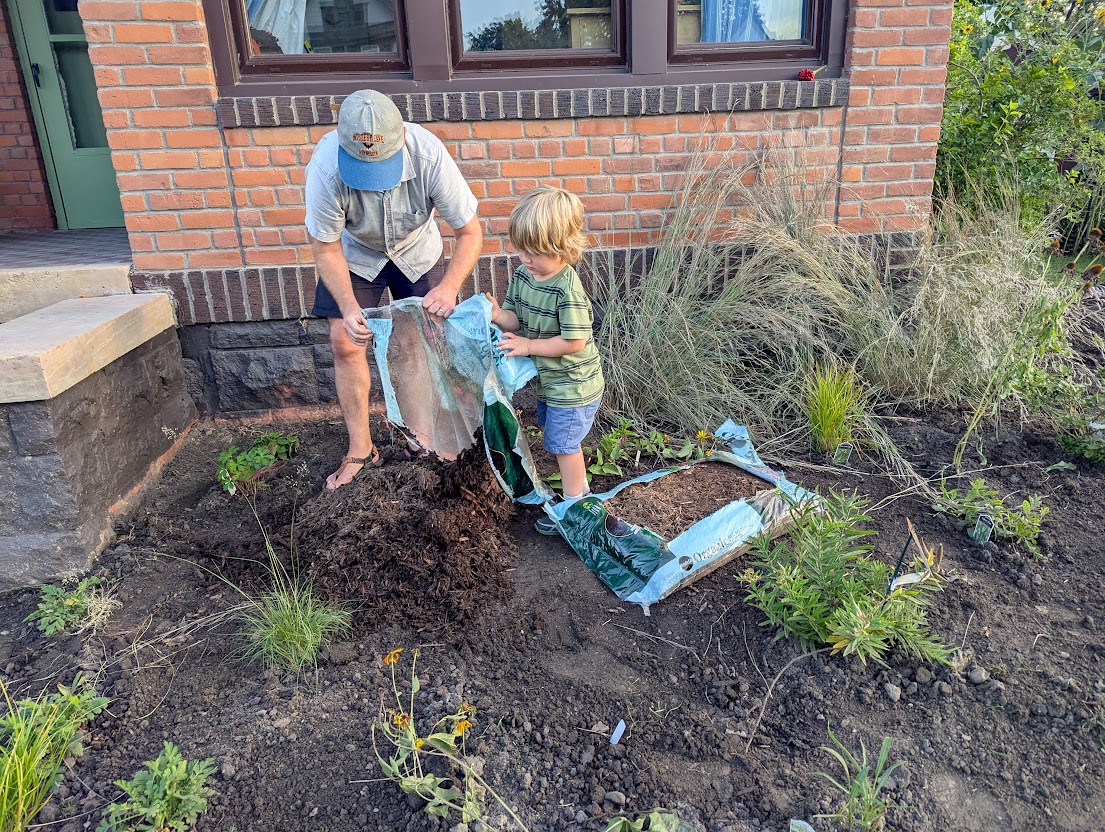
- Truth be told, when I applied, I didn’t realize how much physical labor the scope of my project required. We peeled up all of the grass on our front lawn, planted plants and plugs, and spread organic mulch to keep the weeds at bay. Then we watered the said area by hand until the first hard frost. Years from now, this area of our lawn will be low maitenence but the installation of a native garden is nothing to sneeze at.
- What am I going to plant?
- I wanted to plant my whole yard with a mix of grasses and wildflowers, but some grantees keep it real simple by planting bushes or a tree. Whatever you’re picturing, you can find plants that work for your location and vision when you use the UofM plant finder.
- Where can I plant natives?
- No lawn? No problem. You do not need a lot of space to receive a grant. You can use your balcony or that strip of dying grass around your walkway. The L2L program encourages container and pocket gardening.
- Am I willing to commit?
- Unlike a veggie garden, you don’t reap the benefits of a native garden right away. Establishing the garden requires a few years of maintenance, such as watering and weeding invasive plants that are trying to re-stake their claim. It’s not a ton of work, but you need to be there for it, so if you’re planning to move in the next couple of years, you may want to wait and apply when you’re in a more permanent spot.
How to Apply for a Lawn to Legume Grant
Filling out the application is easy. Fill out the interest form or apply through this link. Once you’re applying, you’ll provide your general information, including the spot where you’d like to plant and the scope of the project, including the general estimated dimensions of the garden. Have some idea what you want to do before applying, but if you change your mind as you learn from the L2L program, that is not a problem. They are not looking for reasons to disqualify gardeners from their program!
Spring and Fall Funding
There are two rounds of funding each year. I was surprised in May of 2025 with a grant award for the fall of 2025. I applied in early January, 2025 for the spring grant.
If the grant application is closed, sign up to receive updates. When applications are available, you’ll be notified. In the meantime, start planning your project with L2L online resources. Isn’t that the fun part, anyway?
What is covered under the Lawn to Legume Grant?
Grantees may be eligible for up to 400 dollars in grant funding. This goes a long way to establishing extra habitat for your neighborhood pollinators. When we were awarded the grant, I learned funding isn’t limited to plants and seeds.

Here are the main expenses that the L2L program funds:
- Native plants and seeds
- Service costs, such as labor or consultation
- Weed suppression materials such as mulch (mulch must be organic)
- Up to 100$ worth of edging or fencing
Beware of Cultivars
The L2L grant does not cover most cultivars of native plant species. What does this mean? Any plant with a little copyright sign next to its name is not eligible for reimbursement. Many nurseries only have cultivars of wildflower classics such as Phlox, Bergamont, and Asters. Why aren’t these covered? Cultivars are less valuable to native pollinators for breeding and feeding, and general survival. Once I realized how pervasive cultivars were, I began to wish I had made the trip to a native specific nursery.
My local nurseries were able to provide me with many beautiful native plants that qualified for reimbursement. However, I would have paid less and gotten more of the plants on my extensive list by ordering plugs through a native MN nursery online, or going to a nursery that specialized in natives. Now I know why the experts at L2L strongly suggest purchasing plants from a nursery on their vetted list of retailers.
If you are at a standard nursery, flag someone down and tell them that you’re shopping for a Lawns to Legumes project. They will know what plants are and are not covered. The last nursery I went to even had an L2L table to shop from. Shout out to Drummers and your super helpful staff!
Get More For Your Money With Plugs
While plugs (plant seedlings) won’t give you the immediate satisfaction of a full garden, they are a great way of getting a lot of plants for less money. A friend of mine ordered hundreds of plants, curated for her specific lawn needs through a nursery. If I did it again, I would order plugs and combine those with a few native shrubs to create an established-looking native zone in my front lawn.
How does the Lawn to Legume funding work?
Lawns to Legumes offers up to 400 dollars to each standard native planting project. The majority of L2L grantees pay for their expenses up front.
Be sure to keep all of your receipts and ensure they are itemized. In fact, take a picture of them as soon as you make your purchase, so that you know you won’t lose the information on them. You will need to send those reciepts in to get reimbursed before the reimbursement due date at the end of your growing season. It took about two months for my reimbursment check to arrive in the mail. However, the program kept me updated, so while reimbursement wasn’t instant, I knew what to expect along the way.
Use The Lawns to Legumes Resources
Yes, the funding is nice, but all the L2L resources helped me plan along the way. There are dozens of resources you can access on their website without even being a grantee. Go ahead and check out their guides. Throughout the process, I received emails inviting me to online seminars and workshops.
My favorite resource, however, was getting in touch with a gardening coach who invited me to her home. She showed my family around her extensive garden, explaining how she established each section. She also introduced my son to her chickens and sent me home with wildflower plugs. I loved that this program made me feel like I was tapping into a new community, leveling up, if you will.
Don’t Do It Alone

Speaking of community, this project was far from a solo job. Though I signed us up without consulting him, my husband was a huge source of brain and muscle power behind this project. Even my four-year-old did his fair share of shoveling. I also talked to all my neighbors (and anyone who would listen). Because they were aware of what I was doing and how excited I was, my neighborhood did a lot of cheerleading, and some neighbors even gave us some seeds and plugs from their native plants.
I would encourage anyone interested in learning more about gardening, pollinators, and native plants to look into the Lawns to Legume program. It’s an amazing resource, and I’m so grateful to have been awarded the grant. And to my husband, I’m sorry, but the front lawn was just the beginning. We need to talk about the side yard. I think we have room for a tree.
Want to learn more about my gardening journey? Check out my article on edible perennials! Questions about what I’m planting this spring? Want an update on how my natives are growing? Leave a question in the comments below. I’m always happy to talk to another gardener.
2 responses to “We Got a Grant! What You Need to Know About the Lawn to Legume Program”
Great information! Thank you for sharing!
Thank you! You’ll have to come see the garden this summer!